Illustration
By HDNF Editorial Team
Editorial review: HDNF Communications Team
World Food Day flagship article: October 16, 2026
Haiti does not need another promise that ends when the shipment ends.
HDNF's Haiti 2050 work centers on two beneficiary groups too often left out of long-term planning: one million small farm holdings averaging 0.93 hectares (about 2.3 acres), according to Haiti's 2008-2009 General Agricultural Census (MARNDR, via FAO), and an estimated 400,000 artisans whose skills remain part of the country's economic foundation ([UNESCO; FinDev Gateway, 2004; 2012 press coverage]). Relief matters. Hunger is real, and HDNF does not tell anyone to refuse food. Emergency assistance protects families when they are in immediate danger. But food arriving by ship was never designed to replace the ability to grow food at home. That is the gap we must close.
Haiti needs the ability to produce food, power, skills, income, and opportunity at home.
Relief is immediate. Production is lasting.
The island that fed itself
Haiti is not poor because Haitians cannot produce.
The historical record shows something different. Through the 1970s and into the 1980s, Haitian farmers produced most of the rice Haitians ate. The Artibonite Valley functioned as a working breadbasket, with irrigation, fields, mills, markets, and families whose livelihoods depended on planting and selling rice.
The United States Department of Agriculture's Economic Research Service reported in 2016 that Haiti was self-sufficient in rice before opening its market to imports in 1986. A 2010 USDA Foreign Agricultural Service report likewise described Haiti as nearly self-sufficient in rice during the 1970s and mid-1980s. The Artibonite Valley remained the center of domestic rice production. (USDA ERS, Haiti's U.S. Rice Imports, 2016; USDA FAS, Rice Production and Trade Update, 2010)
Then the market changed.
Rice import restrictions were reduced in 1986. Tariffs were cut again in the 1990s. Imported rice became cheaper in Haitian markets than rice produced by many Haitian farmers. The 2016 USDA report documents the resulting surge in imports, while domestic production stagnated. A 2024 study by Faniel Frenat and Valdemar João Wesz Junior traces the same pattern: liberalization increased the flow of imported rice while weakening the economic conditions for local production. (Frenat & Wesz Junior, 2024)
For a household, this was not an abstract trade policy.
A farmer planted seed, paid labor, managed water, harvested, transported, and brought rice to market. If the market price would not cover those costs, planting became a loss. Farmers reduced planting, changed crops, left fields unused, or sought other work. Families that once earned income from production became buyers of food produced elsewhere.
The country did not lose its ability to produce overnight. It lost the conditions that allowed production to continue.
What food insecurity actually costs a family
Food insecurity is not only an empty plate.
It is a parent choosing between food and school transportation. It is seed sold to buy the next meal. It is livestock sold before it can reproduce. It is a household eating less today and losing productive capacity tomorrow.
The IPC's actualised update, published 16 April 2026, found more than 5.83 million people, 52 percent of the analysed population, facing acute food insecurity at IPC Phase 3 or above for the March-June 2026 period. (IPC, Haiti Acute Food Insecurity Snapshot, March-June 2026, actualised update published 16 April 2026)
The IPC analysis for August 2024 through February 2025 reported that food spending reached as much as 70% of household expenditure by September 2024. (IPC analysis summarized by ACAPS, 2025)
This means families have little room to absorb a price increase, a failed harvest, a blocked road, or a lost day of work.
Food assistance can help a family survive the crisis. But survival alone is not self-reliance. A durable response must restore the systems that allow families to produce, preserve, sell, and eat food.
Hunger is urgent. Production is the answer that lasts.
Production requires five connected sectors
Food does not exist in isolation. A farmer needs energy, tools, storage, knowledge, transportation, and markets. That is why HDNF organizes its work across five connected sectors.
1. Food Production
We support farmers in growing fruits, vegetables, grains, and livestock suited to Haiti's land and climate. The goal is not simply to distribute inputs. The goal is to strengthen local knowledge with reliable data, technical advice, better soil management, and systems farmers can own and operate.
2. Energy Independence
Production depends on energy. Biodigesters, improved wood stoves, and waste-to-energy systems can reduce dependence on outside fuel while placing energy generation closer to the community. Energy made locally supports cooking, processing, storage, and small enterprises.
3. Preservation Skills
A harvest is not secure if it spoils before a family can use or sell it. Canning, fermenting, and dehydrating extend the value of food and reduce waste. Preservation turns one harvest into food available across more of the year.
4. Craftsmanship
A self-reliant community must be able to make and repair what it uses. Woodworking, sewing, and tool repair create skills, services, and income while reducing dependence on imported goods.
5. Sustainable Tourism
Haiti's culture, history, and natural environment can support community-centered tourism when local people remain owners and decision-makers. Tourism should generate local income while protecting communities, heritage, and natural resources.
These sectors reinforce one another.
Food supports households. Energy supports food processing. Preservation protects harvests. Craftsmanship creates tools and livelihoods. Sustainable tourism expands local income. This is not five separate programs. It is one production system.
Illustration
Haiti's history is a history of builders
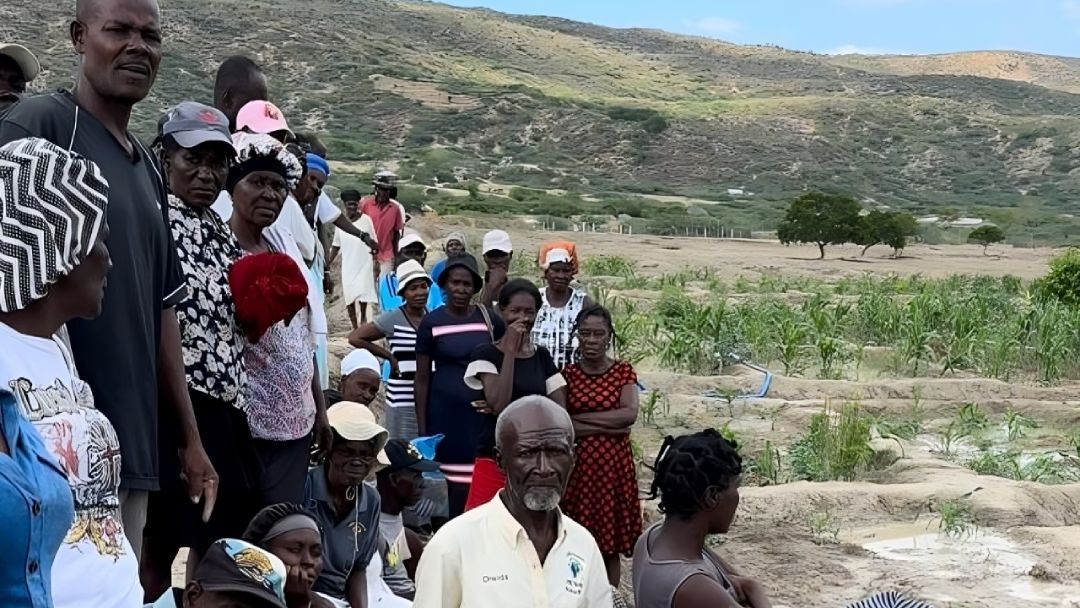
Haitians have fought for liberty since the beginning of the country's history. They have never been passive recipients of someone else's future.
Around 1679, historians associate Port-de-Paix with an early uprising, part of a longer tradition of resistance and marronage; the surviving documentation is limited, and sources describe those involved differently, so this date should be presented carefully. In 1779, the Chasseurs-Volontaires de Saint-Domingue fought at Savannah during the American Revolution. In 1791, the gathering remembered as Bois Caïman became part of the historical memory of the uprising that began the Haitian Revolution. In 1804, Haiti declared independence and became the first independent Black republic.
The timeline matters because production is also an expression of freedom.
A country that cannot grow enough food, generate enough energy, preserve its harvests, or maintain its tools remains vulnerable to decisions made elsewhere. Self-reliance does not mean isolation. It means having the capacity to choose, negotiate, build, and recover.
What replaced guesswork
On May 1, 2026, HDNF launched the Precision Agriculture Initiative to help farmers make decisions based on the specific conditions of their land.
The method is practical:
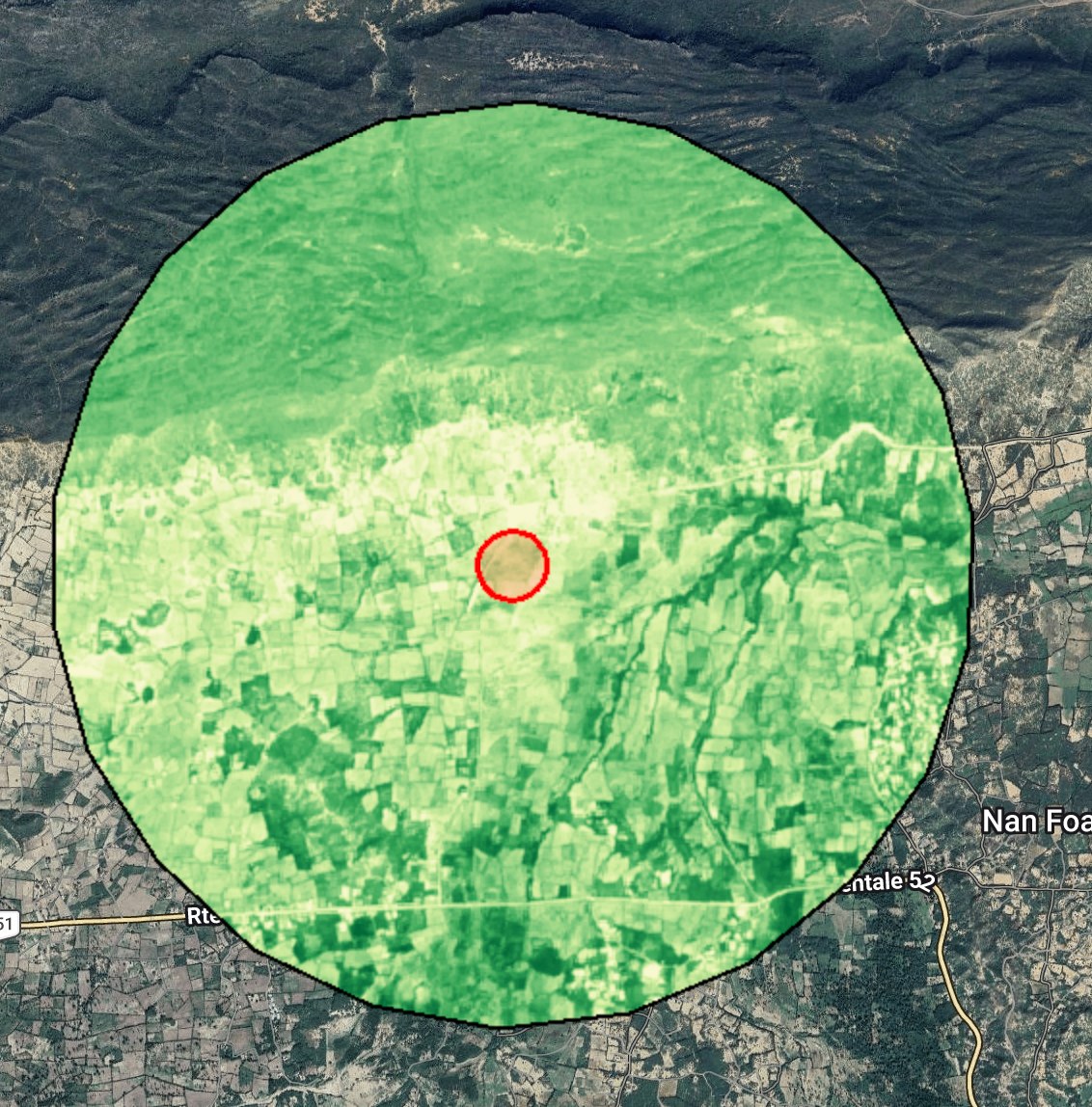
- Satellite imagery identifies differences in vegetation and field condition.
- Soil analysis shows what nutrients are present and what may be lacking.
- Terrain mapping identifies slope, runoff, and erosion risks.
- Expert agronomic advice translates the data into practical choices.
- Farmer knowledge completes the picture because the person who works the land knows its history, water flow, planting patterns, and changing conditions.
The result is one plot, one plan.
This approach matters because Haiti's land is not uniform. Bargout and Raizada's 2013 review, Soil nutrient management in Haiti, pre-Columbus to the present day, explains how topography, rainfall, soil type, erosion, deforestation, and inadequate nutrient replenishment affect agricultural productivity. The review also documents farmer-developed practices and recommends stronger training in soil management, cover crops, composting, erosion control, and appropriate fertilizer use. (Bargout & Raizada, 2013)
HDNF's preliminary geospatial screening shows how satellite imagery and terrain data can guide soil sampling, crop selection, nutrient planning, and seasonal monitoring. (HDNF Precision Agriculture Initiative)
This is not technology for its own sake.
It is science placed in the hands of farmers.
Generational, not electoral
Haiti 2050 is not an election slogan. It is a long-term framework.
The goal is clear: help Haiti move from emergency relief toward a self-sustaining society by 2050. That requires a 25-year horizon, not a short campaign, a single grant cycle, or a temporary project.
Poverty reduction matters, but the destination must be larger than poverty reduction. The destination is self-sufficiency: communities that can produce food, manage energy, preserve harvests, build livelihoods, and expand local ownership.
Electoral cycles are immediate. Generational systems are lasting.
HDNF does not endorse or oppose any candidate, political party, or administration. Our work is centered on communities, evidence, technical capacity, and the long-term interests of working and middle-class Haitian families.
Join the work that outlasts relief
The question is not whether Haiti has talent. Haiti does.
The question is whether that talent has the tools, data, infrastructure, funding, and trusted partnerships required to produce at scale.
Your support can help fund the following. This is a list of intended uses of donor support, and it does not represent these programs as already installed, operating, implemented, or measured:
- Farm-level satellite and terrain analysis.
- Soil sampling and agronomic guidance.
- Community gardens, irrigation, and food production.
- Livestock systems that strengthen household food supplies.
- Preservation training that reduces harvest losses.
- Local energy solutions and practical equipment.
- Skills in craftsmanship, repair, and community enterprise.
Learn how HDNF works toward Haiti's 2050 goals and see how this work moves Haiti from dependence toward self-reliance.
The work is not about rescuing Haitians. It is about standing alongside farmers, families, entrepreneurs, and community leaders who are already building.
Not another delivery. A stronger production system.
Sources and methodology
This article used:
- USDA Economic Research Service, Haiti's U.S. Rice Imports, 2016. The report documents Haiti's pre-1986 rice self-sufficiency, market opening, import growth, domestic production trends, and the central role of the Artibonite Valley.
- USDA Foreign Agricultural Service, Rice Production and Trade Update, 2010. The report describes Haiti's near self-sufficiency in rice during the 1970s and mid-1980s and the subsequent growth of imports.
- Faniel Frenat and Valdemar João Wesz Junior, "Economic liberalization in Haiti and its effects on rice production," Revista NERA, 2024.
- Remy N. Bargout and Manish N. Raizada, "Soil nutrient management in Haiti, pre-Columbus to the present day: lessons for future agricultural interventions," Agriculture & Food Security, 2013.
- Integrated Food Security Phase Classification, Haiti Acute Food Insecurity Snapshot, March-June 2026, actualised update published 16 April 2026.
- ACAPS, Haiti: Anticipated Implications of U.S. Funding Freeze, 2025, summarizing IPC findings on household food expenditure and acute food insecurity.
- Haiti's 2008-2009 General Agricultural Census, MARNDR, via FAO, for the average holding size of about 0.93 hectares (about 2.3 acres).
- UNESCO, FinDev Gateway, 2004 handicraft sector research, and 2012 press coverage on the estimated scale of Haiti's artisan economy.
- Encyclopaedia Britannica, "Port-de-Paix," and OpenEdition scholarship on the differing descriptions in the surviving record for the early Port-de-Paix uprising.
- John D. Garrigus, Before Haiti: Race and Citizenship in French Saint-Domingue, for the Chasseurs-Volontaires de Saint-Domingue and the wider Atlantic context.
- Laurent Dubois, Avengers of the New World: The Story of the Haitian Revolution, and Carolyn Fick, The Making of Haiti, for the Haitian Revolution, Bois Caïman, and independence.
- HDNF's Food Security Programs and Precision Agriculture Initiative.
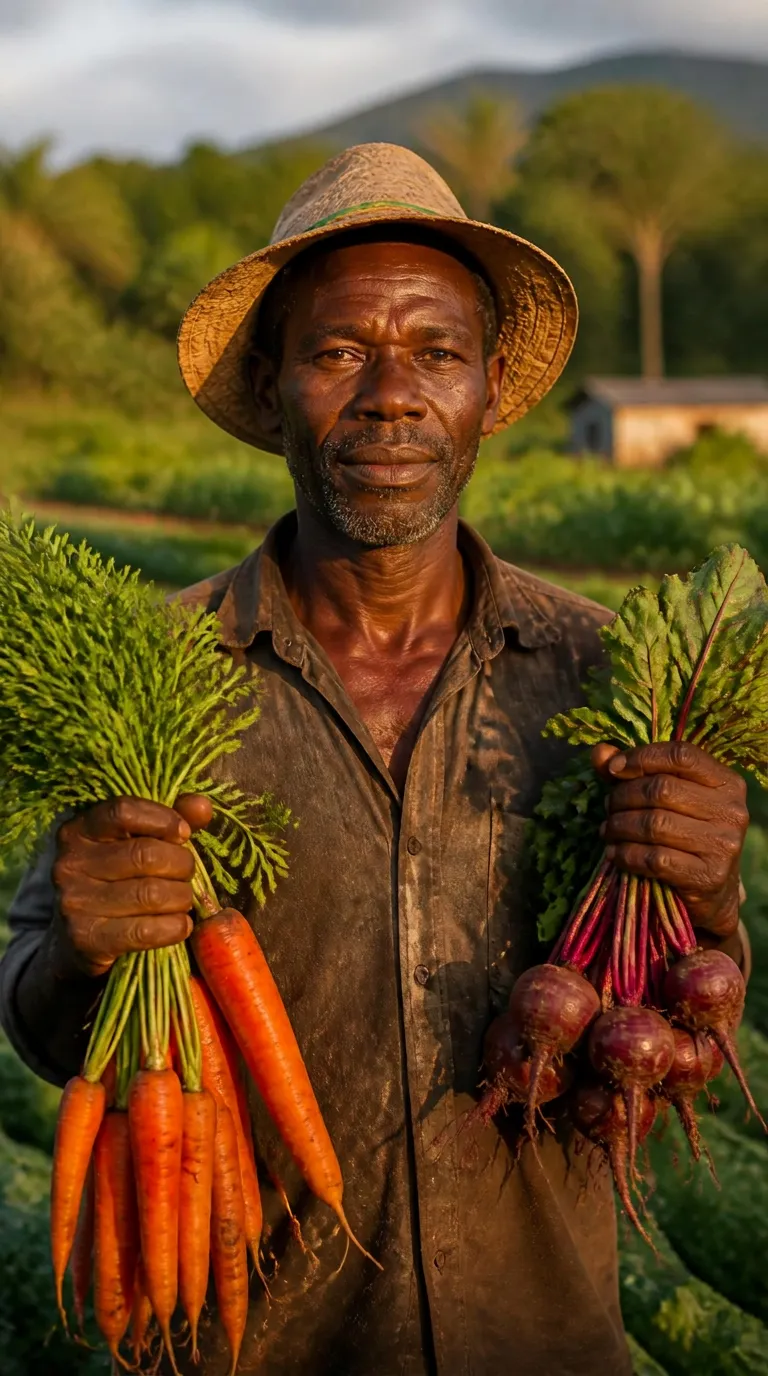
- Image note: the photographs in this article are AI-generated illustrations, not images of real individuals or of HDNF operations. The NDVI map is a screening figure produced for the Precision Agriculture Initiative.